


In this article:
Coconut oil is a true blessing for the hair care world. This oil is immensely beneficial for almost all hair types, including low-porosity hair.

The advantages of using coconut oil on hair are endless, but the reason it works so great on low-porosity hair is its ability to move deeply into the hair shaft. (1)
Low-porosity hair has very closed-up and tightly woven cuticles that make it hard for hair products to penetrate through (2) and be absorbed by the hair strands.
Fortunately, the small size of coconut oil and its excellent penetrative ability (1) make it beneficial for low-porosity hair.
Plus, coconut oil has gained a lot of fame over the years for being an amazing hair remedy for many hair issues because of its outstanding nutritional profile. (1)
Continue reading to learn the various benefits of putting coconut oil on your locks.
Benefits of Coconut Oil for Low-Porosity Hair
The many hair care powers of coconut oil can help nourish and improve the health of low-porosity hair.
1. Deeply penetrates low-porosity hair
What makes low-porosity hair different from other hair types? It’s the presence of cuticles that are very close to each other, which makes it almost impossible for the hair strands to absorb hair products. (2)
This characteristic of low-porosity hair even makes the absorption of water very hard for the hair.
So, if you have low-porosity hair, you need to find products that can easily move into the hair, and coconut oil is one of them!
According to a study, coconut oil showed the highest penetration capacity compared with many other hair oils. This is due to its light molecular weight and straight-chain arrangement that allow its easy entry into the hair. (3)
2. Supports hair strength and growth
The exceptional hair growth-promoting nutrients in coconut oil make it a must-have for people who wish to support hair growth but have low-porosity hair.
This oil’s ability to prevent protein loss is another reason it is great for strengthening the hair and supporting its healthy growth and development. (1)
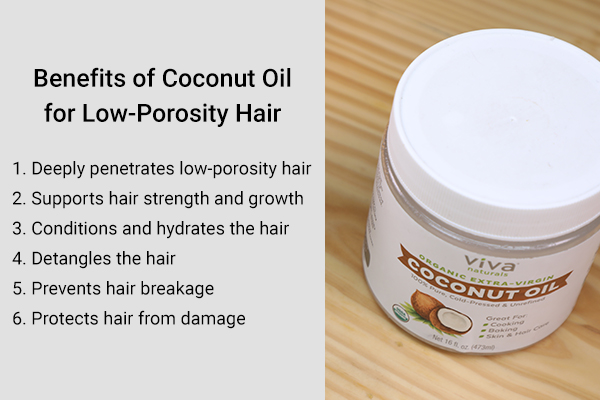
3. Conditions and hydrates the hair
Coconut oil has a very good and natural emollient action that makes it possible for water or moisture to remain entrapped in the hair.
It does so by making a covering around the hair shaft so that the moisture does not escape and your locks remain well hydrated and thoroughly conditioned. (1)
4. Detangles the hair
If you have noticed that your hair gets tangled very often and no product makes it easy for the brush to glide through your strands easily, then it is time you turn to coconut oil.
This oil will nicely be absorbed by low-porosity hair strands and lubricate the locks, because of which your hair will not get stuck into one another and remain detangled. (1)
5. Prevents hair breakage
According to a study, coconut oil is a great remedy for people who suffer from hair breakage. It ensures healthy maintenance of the scalp and strands. It prevents any scalp infestations, thereby preventing brittleness or weakening of the hair. (4)
6. Protects hair from damage
If your low-porosity hair is damaged and unhealthy, coconut oil is a good solution for you!
Coconut oil is an excellent agent that can protect your hair from the damaging effects of heat styling or the chemicals used on your hair.
According to researchers, coconut oil is much better at controlling hair damage when compared to other commonly used care products such as shampoos and conditioners. (5)
Side Effects of Coconut Oil on Low Porosity Hair
Although there are not a lot of serious side effects associated with coconut oil use on low-porosity hair, using coconut oil in high amounts can weigh down your hair, make it look greasy, and even cause a buildup of oil over time, which are not good for hair health.
Therefore, it is always best to use a small amount of oil on the hair, only as much as required. Also, remember to completely wash out the oil the next morning or after a couple of hours to prevent product buildup.
How to Use Coconut Oil on Low-Porosity Hair?
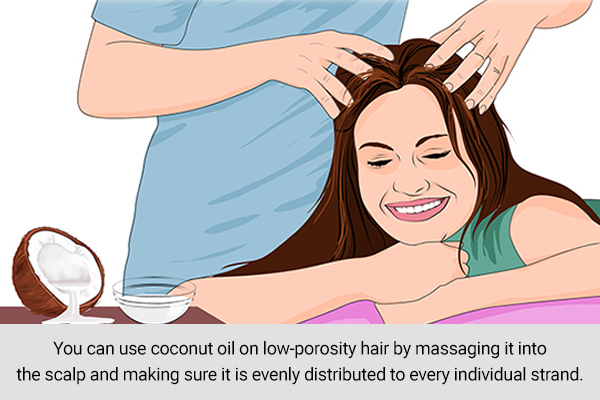
You can use coconut oil on low-porosity hair by massaging it into the scalp and making sure it is evenly distributed to every individual strand. Also, it is best to use it on slightly damp hair for easy application.
Remember to wash the oil away with shampoo after 2-3 hours of oil application or the next day because continuous oiling without washing the hair can cause product buildup.
Note: To increase the penetrability of oil in the hair, you can first use a steamer to steam your hair to open up the cuticles a bit.
Most-Asked Questions
How do you wash low-porosity hair?
You can wash low-porosity hair using cleansing shampoos. However, low-porosity hair requires more rinses for a proper wash when compared to medium- or high-porosity hair.
Is it important to oil low-porosity hair?
Yes, low-porosity hair should be oiled regularly as it requires proper moisturization.
Final Word
Finding suitable products for low-porosity hair can be incredibly hard. Thankfully, coconut oil is an easily available and incredibly affordable product that does wonders for low-porosity hair.
Do not wait any longer, and start using coconut oil on your hair to make it healthy and happy!
- Was this article helpful?
- YES, THANKS!NOT REALLY

