


In this article:
Heat styling – it’s a daily routine for many. But how do you tell when your hair has gone from styled hair to damaged hair by all that heat?

Heat styling tools such as flat irons and curling irons, along with blow-dryers and even sunlight, can harm your hair. Heat damage is quite common, and those daily blowouts might be taking a toll on your hair.
So, what is heat damage? It’s when your hair’s keratin fibers, which are essential for healthy hair, break down due to exposure to high temperatures. (1)
Once your hair’s keratin fibers are damaged, they can’t fully recover. But don’t worry – you can still care for your hair and protect it from further damage.
Continue reading to know the signs of heat damage to catch them before it’s too late.
Signs of Heat-Damaged Hair
Here are some signs your hair is damaged by heat.
1. You’re experiencing hair fall
Hair loss is a frequent outcome of heat-induced hair damage. When you subject your hair to constant heat through practices such as using hair straighteners and heat styling tools, you unintentionally risk damaging your hair and potentially experiencing hair loss. (2)
This is because heat can denature the keratin protein in the hair, further leading to hair weakening and degradation of hair components. (1)
2. You have “bubble” hair
Bubble hair is a condition that results from subjecting your hair to high heat. This unique hair issue causes the hair shaft to develop bubble-like spaces within it. In simple words, it is like small pockets of air trapped in the hair.
Essentially, bubble hair is a thermal injury that occurs when you use hot tools such as hair dryers, curling irons, or straighteners excessively.
As a consequence, your hair can become dry, brittle, and prone to breaking, leading to patchy hair loss. (3)
3. Your hair is weak and breaks easily
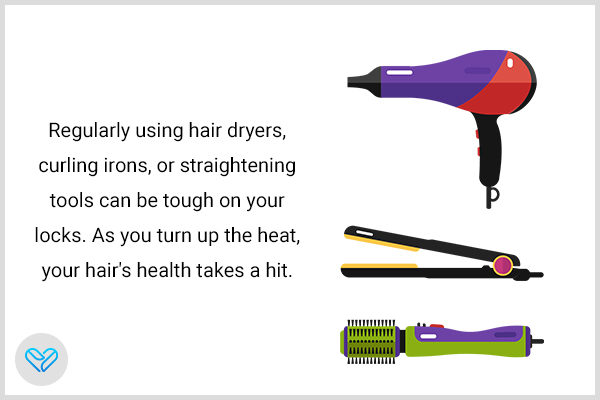
Regularly using hair dryers, curling irons, or straightening tools can be tough on your locks. As you turn up the heat, your hair’s health takes a hit.
Blow-drying doesn’t just affect the surface of your hair but also causes much deeper damage. It changes the very structure of your hair. This makes your hair more fragile and more likely to snap and break.
These tools temporarily alter the bonds within your hair shaft to create those stunning styles you love. However, this process can also weaken your hair and leave it susceptible to damage and breakage. (4)
4. Your hair has changed color
Frequent use of heat styling tools can cause your hair to undergo a noticeable change in color. After around 10 blow-drying sessions at a high temperature of 95 °C, you may observe that your hair starts to lighten.
The heat seems to affect the natural pigments in your hair, resulting in this gradual alteration of color. (4)
5. Your hair feels dry and rough
Exposing your hair to high heat during styling causes loss of moisture, leading to hair dryness and roughness.
When the temperature surpasses 140 °C, structural changes in the hair occur, with the cuticle folding and its protective scale vanishing. These alterations result in an irreversible loss of the hair’s smoothness and texture.
Such extreme heat essentially robs your hair of its natural moisture and protective barriers, leaving it dry and rough. (5)
How to Protect Hair from Heat Damage?
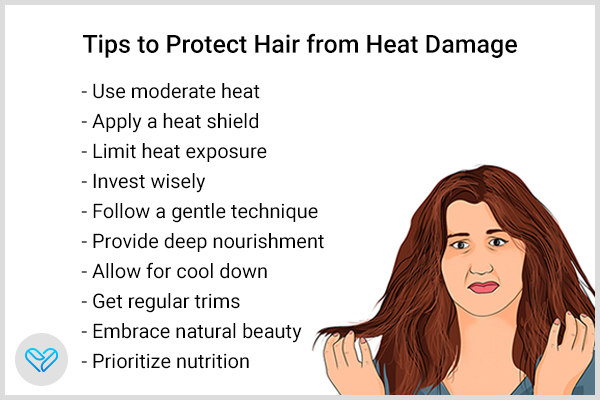
By following these simple yet effective steps, you can ensure that your hair remains beautiful and damage-free, even when using heat styling tools:
- Use moderate heat: Lower the temperature on your styling tools. High heat can be too harsh on your hair.
- Apply a heat shield: Always use a quality heat-protectant spray or serum before styling to create a protective barrier.
- Limit heat exposure: Avoid daily heat styling – give your hair a break to recover.
- Invest wisely: Invest in good-quality styling tools designed to minimize damage.
- Follow a gentle technique: Use your styling tools gently and avoid excessive heat exposure to your strands.
- Provide deep nourishment: Pamper your hair with deep-conditioning treatments to restore moisture and repair any damage.
- Allow for cool down: Let your hair cool down before restyling to reduce stress on your strands.
- Get regular trims: Schedule regular trims to prevent split ends and encourage healthy growth.
- Embrace natural beauty: Embrace your hair’s natural texture from time to time to reduce the need for heat styling.
- Prioritize nutrition: A well-balanced diet rich in hair-friendly nutrients is essential for overall hair health.
Most-Asked Questions
Can damaged hair be repaired?
Hair damage from heat can be irreversible when heat styling is done excessively, but it can be managed by proper hair care.
Can home remedies help with heat damage?
Yeah, coconut oil can be a good remedy for heat-damaged hair.
Is air-drying a safer option?
Yes, it can be!
Final Word
Recognizing signs of heat-damaged hair is essential. These signs include hair loss, “bubble” hair, weakened strands, color changes, and dryness.
Safeguard your hair by reducing styling tool temperatures, using heat protectants, and investing in high-quality tools. Embrace your natural hair texture, apply deep conditioning treatments, and ensure regular trims.
Although some damage may be irreversible, proper care can significantly improve overall hair health.
- Was this article helpful?
- YES, THANKS!NOT REALLY

