


In this article:
A head lice infestation can be quite displeasing for many. However, even though these tiny creatures make your scalp itch like crazy, they are never really the main culprits behind hair loss.

Being stressed out from having lice, excessively scratching the scalp with your nails, or having an allergic response to lice are the real factors that contribute to lice-related hair loss.
Head lice are parasites that call your scalp their home. They live in hard-to-find, hidden spots on your head, covered up in your hair.
They are majorly present around the ear and back of the neck. In rare cases, they also travel to the eyebrows and lashes. (1)
These creatures rely on your scalp for their survival. They lay their eggs and complete their entire life cycle living rent-free on your head.
So, while head lice will not bring about hair loss, it is still very possible to experience some temporary hair loss during a lice infestation. How and why? Read on to find out.
Are Head Lice Related to Hair Loss?
Dermatologists and hair specialists have made it clear that the claim that lice cause hair loss is simply a myth.
Lice infestation is never a direct cause of hair loss. However, people do experience hair loss when they have head lice due to other reasons, and this is known as secondary hair loss.
Secondary hair loss can be due to the following.
1. Uncontrolled scratching of the head
Aggressively and excessively scratching your head when you have lice is one of the main culprits for hair loss related to lice. (2)
The creatures are known to make your head very itchy, making you want to just dig your nails into your scalp and go crazy at it. (1)
However, scratching is a bad idea as it causes inflammation or scarring on the scalp and leads to hair loss. (3)
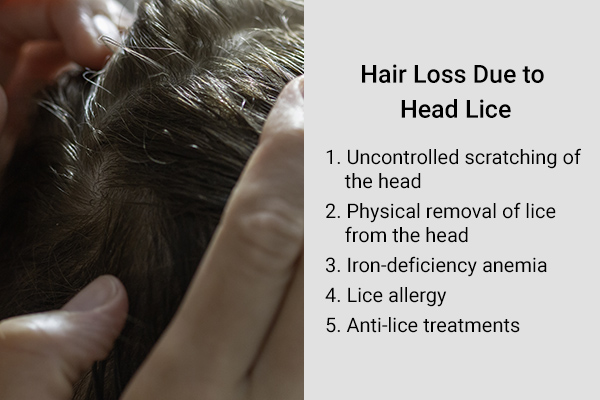
2. Physical removal of lice from the head
The process of manually removing lice and their eggs from the hair is a tedious process that involves the use of pointed or fine-toothed combs or very narrow brushes (4), which tug and pull your strands, contributing to hair loss.
Wet combing is also a common method of removing lice (1), and it involves the use of special lice removal combs known as nit combs that are supposed to be used in the shower when the hair is wet.
However, combing wet hair can lead to hair breakage as wet hair is pretty weak. This practice may lead to hair loss. (5)
3. Iron-deficiency anemia
Although very rare, iron deficiency anemia may develop when you have a lice infestation. (6) This condition can make your hair weak, making it very easy for the hair to break and shed. (7)
4. Lice allergy
Some people have an allergy to lice, and if these people get head lice, their body is bound to stay in a mode of active allergic responses that eventually contribute to hair loss. (8)
5. Anti-lice treatments
Shampoos and hair products that control lice infestations work by killing the lice and, sometimes, even their eggs.
However, some of these products may contain very harsh chemicals that may cause harm to your hair, making it weak and prone to breakage, leading to hair loss.
How to Manage Secondary Hair Loss Caused by Lice?
Here’s how you can manage lice-related hair loss:
- Apply the recommended lice treatment to get rid of lice from your scalp.
- Stop scratching to prevent hair damage. Anti-itch products can provide relief if necessary.
- If lice eggs (nits) are present, gently remove them with a fine-toothed comb.
- Use anti-lice shampoo post-treatment to keep your scalp clean.
- If you have lice allergies, consult a healthcare professional for proper care.
- Consume iron-rich foods to support hair health.
- If hair loss persists, consult a dermatologist or healthcare provider.
How to Use A Nit Comb for Lice Removal?
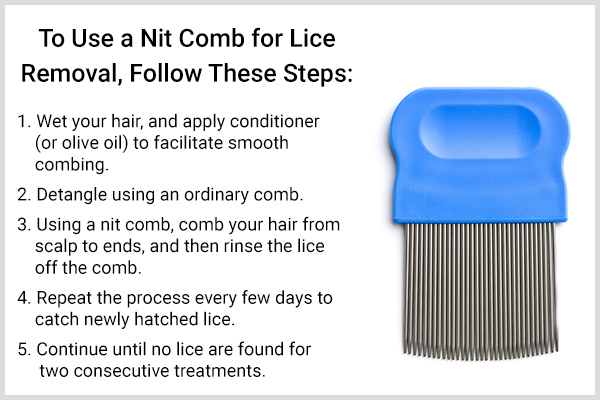
To use a nit comb for lice removal, follow these steps (4):
- Wet your hair, and apply conditioner (or olive oil) to facilitate smooth combing.
- Detangle using an ordinary comb.
- Using a nit comb, comb your hair from scalp to ends, and then rinse the lice off the comb.
- Repeat the process every few days to catch newly hatched lice.
- Continue until no lice are found for two consecutive treatments.
Most-Asked Questions
Can lice live on my eyebrows or eyelashes?
Yes, sometimes lice can make a home in these body parts too.
Do lice spread easily from person to person?
Lice can crawl from one person to another, especially when you’re in close contact.
Can lice go away on their own?
Lice won’t typically vanish without treatment.
Are pets to blame for lice?
Don’t worry; lice prefer human scalps. Your pets aren’t involved in this issue.
Final Word
A head lice infestation can be unsettling, but it’s crucial to understand they’re not the direct cause of hair loss. Instead, secondary hair loss can occur due to factors such as excessive scratching, the meticulous removal of lice, allergies, and, rarely, iron-deficiency anemia from severe infestations.
- Was this article helpful?
- YES, THANKS!NOT REALLY

