Menu
eMediHealth Logo
Subscribe
No Result
View All Result
eMediHealth Logo
Subscribe
No Result
View All Result

Home > Nervous System > Brain > 11 Daily Habits That Can Damage Your Brain

11 Daily Habits That Can Damage Your Brain

Updated on October 4, 2022
6 min read
By Shiza Khan, M.Sc. – Clinical Nutrition & Dietetics | Dietitian/Nutritionist

A “habit” is essentially defined as a tendency or behavior to act in a certain way or perform a certain task. (1) Most people have a sum of good or bad habits in their life.

bad habits that damage your brain health

However, certain activities can cause serious harm to your health when repeated regularly. (2) While you may be aware of how a sedentary lifestyle affects your physical health, there are other unhealthy habits that you may be doing that can harm your brain and mental health in the long run.

Bad Habits That Are Bad for Brain Health

Here is a list of bad habits that can negatively affect the health of your brain:

1. Skipping breakfast

Breakfast provides your brain and body fuel to kick-start your day. Skipping it regularly can make you feel drowsy and unable to concentrate due to lower blood sugar.

Advertisements

Doing this regularly will deprive your brain of the essential nutrients and signals required for proper functioning. This is specifically important for children and teenagers as their brains are in the developing stages. (3)(4)

2. Bad diet/overeating

Your diet affects every aspect of your health – from your organs and growth to your mental health. It is important to consume a diet rich in vitamins and nutrients and low in refined sugar or fat. (5)

Overconsumption of sugar can lead to metabolic disorders such as diabetes and can increase the risk of ADHD.

While not all fat is bad for you (for example, omega-3 fatty acids help increase brain function), a very fatty diet can also cause brain problems. It can lead to hardened arteries in the long run and decrease blood supply to the brain. (6)(7)

3. Lack of sleep
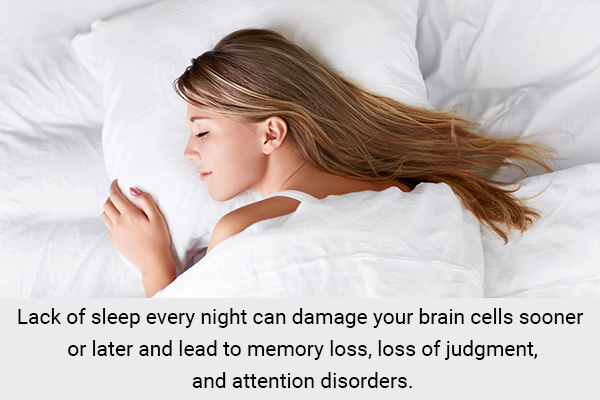
a lack of sleep can damage your brain cells

Sleep is your brain’s way of recharging itself. It is essential for a healthy life.

Lack of sleep every night can damage your brain cells sooner or later and lead to memory loss, loss of judgment, and attention disorders. (8)

Advertisements

A recent study published in 2017 demonstrated the contribution of insomnia and other sleep disorders to the development of neurological issues including Alzheimer’s disease, schizophrenia, and mood disorders later in life. (9)

4. Alcohol intake and smoking

Excessive consumption of alcohol is detrimental to not only your liver but also your brain. (10)

Alcohol is broken down into acetaldehyde in the body. This substance may interfere with the neurotransmitters in your brain, (11) inhibiting the transmission of brain signals and leading to sluggish brain activity, depression, and other issues.

Smoking is also linked with decreased cognitive function and Alzheimer’s disease later in life. (12)

5. Taking recreational drugs

Recreational drugs, such as marijuana, cocaine, and heroin, have addictive properties that interfere with serotonin and dopamine – two important chemicals in the brain that moderate your mood.

Several studies have shown that chronic abuse of these drugs impairs brain function and affects decision making, concentration, and cognitive abilities. They can even trigger depression and anxiety in some people. (13)(14)

Advertisements

6. Lack of exercise

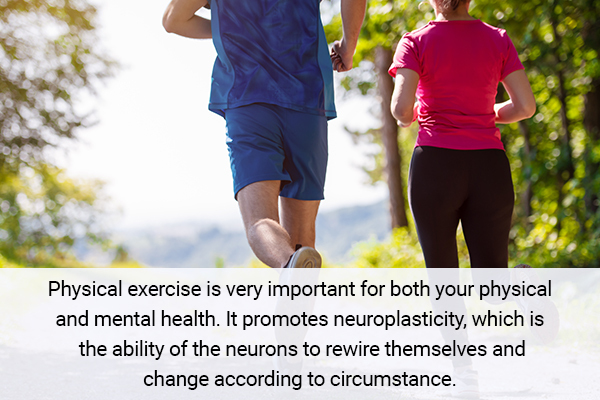
lack of physical exercise can be detrimental to your brain health

Physical exercise is very important for both your physical and mental health. It promotes neuroplasticity, which is the ability of the neurons to rewire themselves and change according to circumstance.

Some studies have shown the benefits of physical activity in promoting blood flow to the brain and increasing brain function. (15)

7. Living alone and not socializing

Human beings are wired to be social animals. They thrive on healthy relationships and interactions. (16)

Not socializing enough or being alone for prolonged periods can lead to reduced cognitive abilities and can put you at risk for depression and anxiety. (17)

8. Drinking too many caffeinated beverages

Coffee and tea contain the active ingredient caffeine, (18) which may be healthy for your brain’s productivity in small amounts.

However, too much of it can have the opposite effect. It can lead to an increase in adenosine receptors in the brain, causing you to feel tired and sluggish sooner than normal.

Your brain develops higher tolerance for caffeine with time and this may turn addictive. So, try to limit your coffee consumption to 2 cups a day. (19)

9. Not drinking enough water
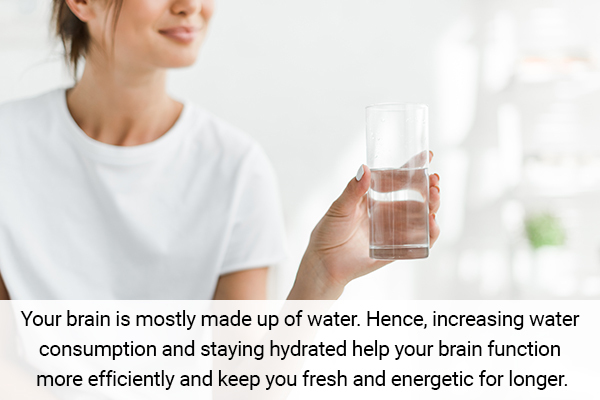
not drinking enough water can hamper your brain function

Your brain is mostly made up of water. Hence, increasing water consumption and staying hydrated throughout the way help your brain function more efficiently and keep you fresh and energetic for longer.

Advertisements

Try to consume about 2 liters of water every day. (20)

10. Forcing your brain to work during stress

Stress can be harmful to the brain in many ways. It is best to rest, relax, or meditate when you are not feeling well or very stressed. Forcing your brain to work during these times can affect your cognitive abilities and damage your brain cells in the long run. (21)(22)

11. Not reading

Several studies have shown that reading is a form of mental exercise and helps stimulate the brain. It increases knowledge and empathetic understanding, improves memory, and feeds creative thinking, especially in growing children. (23)(24)

Final Word

Your brain is literally who you are. Neurological and mental health is extremely important for a healthy and fulfilling life. If you have any of these bad habits that can harm your mind, start changing them today for a happier tomorrow.

Advertisements
References
  1. Smith KS, Graybiel AM. Habit formation. Dialogues Clin Neurosci. 2016;18(1):33-43. doi:10.31887/DCNS.2016.18.1/ksmith.
  2. Kokubun K, Pineda JCD, Yamakawa Y. Unhealthy lifestyles and brain condition: Examining the relations of BMI, living alone, alcohol intake, short sleep, smoking, and lack of exercise with gray matter volume. PLoS One. 2021;16(7):e0255285. Published 2021 Jul 30. doi:10.1371/journal.pone.0255285.
  3. Tang Z, Zhang N, Liu A, et al. The effects of breakfast on short-term cognitive function among Chinese white-collar workers: protocol for a three-phase crossover study. BMC Public Health. 2017;17(1):92. Published 2017 Jan 18. doi:10.1186/s12889-017-4017-1.
  4. Hearst MO, Jimbo-Llapa F, Grannon K, Wang Q, Nanney MS, Caspi CE. Breakfast Is Brain Food? The Effect on Grade Point Average of a Rural Group Randomized Program to Promote School Breakfast. J Sch Health. 2019;89(9):715-721. doi:10.1111/josh.12810.
  5. Gómez-Pinilla F. Brain foods: the effects of nutrients on brain function. Nat Rev Neurosci. 2008;9(7):568-578. doi:10.1038/nrn2421.
  6. Ponzo V, Pellegrini M, Costelli P, et al. Strategies for Reducing Salt and Sugar Intakes in Individuals at Increased Cardiometabolic Risk. Nutrients. 2021;13(1):279. Published 2021 Jan 19. doi:10.3390/nu13010279.
  7. Freeman LR, Haley-Zitlin V, Rosenberger DS, Granholm AC. Damaging effects of a high-fat diet to the brain and cognition: a review of proposed mechanisms. Nutr Neurosci. 2014;17(6):241-251. doi:10.1179/1476830513Y.0000000092.
  8. Medic G, Wille M, Hemels ME. Short- and long-term health consequences of sleep disruption. Nat Sci Sleep. 2017;9:151-161. Published 2017 May 19. doi:10.2147/NSS.S134864.
  9. Krause AJ, Simon EB, Mander BA, et al. The sleep-deprived human brain. Nat Rev Neurosci. 2017;18(7):404-418. doi:10.1038/nrn.2017.55.
  10. Sullivan EV, Harris RA, Pfefferbaum A. Alcohol’s effects on brain and behavior. Alcohol Res Health. 2010;33(1-2):127-143.
  11. Glass JM, Buu A, Adams KM, et al. Effects of alcoholism severity and smoking on executive neurocognitive function. Addiction. 2009;104(1):38-48. doi:10.1111/j.1360-0443.2008.02415.x.
  12. Durazzo TC, Mattsson N, Weiner MW; Alzheimer’s Disease Neuroimaging Initiative. Smoking and increased Alzheimer’s disease risk: a review of potential mechanisms. Alzheimers Dement. 2014;10(3 Suppl):S122-S145. doi:10.1016/j.jalz.2014.04.009.
  13. Cadet JL, Bisagno V. Neuropsychological Consequences of Chronic Drug Use: Relevance to Treatment Approaches. Front Psychiatry. 2016;6:189. Published 2016 Jan 15. doi:10.3389/fpsyt.2015.00189.
  14. Substance Abuse and Mental Health Services Administration (US); Office of the Surgeon General (US). Facing Addiction in America: The Surgeon General’s Report on Alcohol, Drugs, and Health [Internet]. Washington (DC): US Department of Health and Human Services; 2016 Nov. CHAPTER 2, THE NEUROBIOLOGY OF SUBSTANCE USE, MISUSE, AND ADDICTION. Available from: https://www.ncbi.nlm.nih.gov/books/NBK424849/.
  15. Mandolesi L, Polverino A, Montuori S, et al. Effects of Physical Exercise on Cognitive Functioning and Wellbeing: Biological and Psychological Benefits. Front Psychol. 2018;9:509. Published 2018 Apr 27. doi:10.3389/fpsyg.2018.00509.
  16. Hawkley LC, Cacioppo JT. Loneliness matters: a theoretical and empirical review of consequences and mechanisms. Ann Behav Med. 2010;40(2):218-227. doi:10.1007/s12160-010-9210-8.
  17. Yanguas J, Pinazo-Henandis S, Tarazona-Santabalbina FJ. The complexity of loneliness. Acta Biomed. 2018;89(2):302-314. Published 2018 Jun 7. doi:10.23750/abm.v89i2.7404.
  18. Fiani B, Zhu L, Musch BL, et al. The Neurophysiology of Caffeine as a Central Nervous System Stimulant and the Resultant Effects on Cognitive Function. Cureus. 2021;13(5):e15032. Published 2021 May 14. doi:10.7759/cureus.15032.
  19. Planning Committee for a Workshop on Potential Health Hazards Associated with Consumption of Caffeine in Food and Dietary Supplements; Food and Nutrition Board; Board on Health Sciences Policy; Institute of Medicine. Caffeine in Food and Dietary Supplements: Examining Safety: Workshop Summary. Washington (DC): National Academies Press (US); 2014 Apr 23. 6, Caffeine Effects on the Central Nervous System and Behavioral Effects Associated with Caffeine Consumption. Available from: https://www.ncbi.nlm.nih.gov/books/NBK202225/.
  20. Zhang J, Zhang N, Du S, et al. The Effects of Hydration Status on Cognitive Performances among Young Adults in Hebei, China: A Randomized Controlled Trial (RCT). Int J Environ Res Public Health. 2018;15(7):1477. Published 2018 Jul 12. doi:10.3390/ijerph15071477.
  21. Yaribeygi H, Panahi Y, Sahraei H, Johnston TP, Sahebkar A. The impact of stress on body function: A review. EXCLI J. 2017;16:1057-1072. Published 2017 Jul 21. doi:10.17179/excli2017-480.
  22. Renoir T, Hasebe K, Gray L. Mind and body: how the health of the body impacts on neuropsychiatry. Front Pharmacol. 2013;4:158. Published 2013 Dec 18. doi:10.3389/fphar.2013.00158.
  23. Berns GS, Blaine K, Prietula MJ, Pye BE. Short- and long-term effects of a novel on connectivity in the brain. Brain Connect. 2013;3(6):590-600. doi:10.1089/brain.2013.0166.
  24. Price CJ, Wise RJ, Watson JD, Patterson K, Howard D, Frackowiak RS. Brain activity during reading. The effects of exposure duration and task. Brain. 1994;117 ( Pt 6):1255-1269. doi:10.1093/brain/117.6.1255.
  • Was this article helpful?
  • YES, THANKS!NOT REALLY
Spread the Love❤️
Advertisements

You Might Also Like

Nutrition

Does Orange Juice Cause Gastric Problems?

By Shiza Khan, M.Sc. – Clinical Nutrition & Dietetics

Read more

Newsletter

Get our BEST updates delivered to your inbox:


This site is protected by reCAPTCHA and the Google Privacy Policy and Terms of Service apply.

Categories

  • Nutrition
  • Wellness
  • Oral Care
  • Eye Care
  • Heart Health
  • Skin & Beauty
  • Women’s Health
  • Ear, Nose & Throat
  • Respiratory Health
  • Web Stories

Links

  • Home
  • About Us
  • Contact
  • Privacy Policy
  • Terms and Conditions
  • Cookie Policy
  • Editorial Policy
  • Advertising Policy
  • Subscribe to Newsletter
eMediHealth

This site provides content for informational purposes only. The information provided is not intended for use as medical advice, diagnosis, or treatment. In case of a medical concern or emergency, please consult your healthcare provider.

This website is certified by Health On the Net Foundation.

Our Network: Little Extra

© 2019 eMediHealth. All rights reserved.

No Result
View All Result
  • Nutrition
  • Skin & Beauty
  • Wellness
  • Yoga & Meditation
  • Women’s Health
  • Heart Health
  • Allergy & Immunology
  • Bones & Joints
  • Child Health
  • Digestive
  • Ear, Nose & Throat
  • Eye Care
  • Glands & Hormones
  • Health News
  • Infectious Diseases
  • Mental Health
  • Nervous System
  • Oral Care
  • Pain Management
  • Respiratory Health
  • Sleep Disorders
  • Urological Health
  • Web Stories

© 2019 eMediHealth. All rights reserved.